Redmond, WA · Garage Door Service
We drive 15 miles from Redmond to Snoqualmie for garage door repairs, matched to the newer torsion-spring doors typical of this 2000s-built town's houses.
Snoqualmie is 15 miles from our shop in Redmond, out past Fall City and Carnation on the way toward the foothills. We don't keep a truck or a satellite location out here - every job means a drive, and we build that into how we schedule visits rather than promising a same-day arrival we can't back up. The area sits in the same cold, moderate climate band as the rest of the east side, so the freeze-thaw stress on springs and rollers tells the same story it does closer to Redmond: metal fatigues faster through a hard winter, and that shows up as a spring that finally lets go on a cold morning. Because Snoqualmie is a longer haul than closer stops on our route, we ask you to describe the door problem in detail before we head out - what it's doing, what it sounds like, whether the opener still runs - so the truck that shows up carries the right spring size and the right opener parts the first time, not the second.
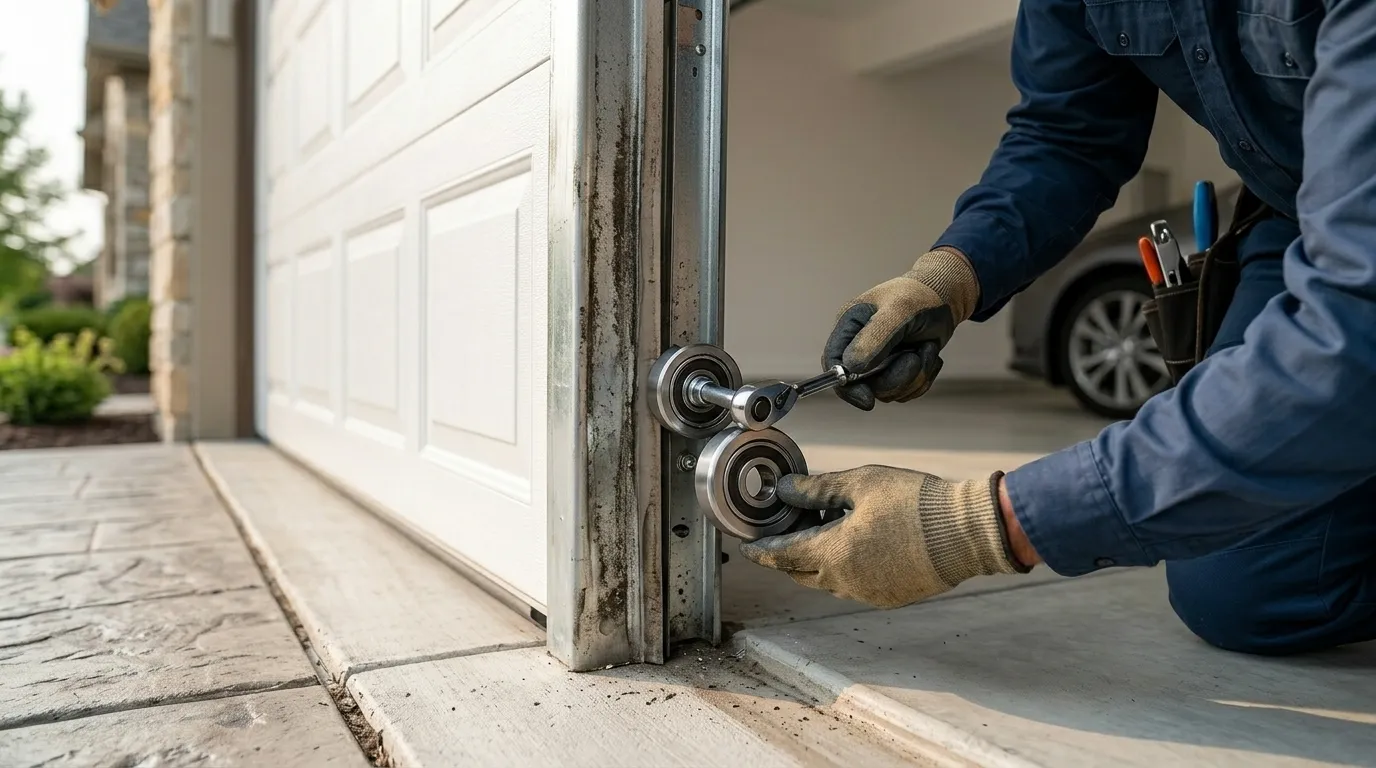
Most of the service area we cover was built between 1965 and 2005, with the bulk of it dating to the 1980s and 90s. Snoqualmie breaks that pattern - its median home here was built around 2005, two decades newer than the typical door we replace elsewhere on our route. That means fewer of the flat, extension-spring doors on wood jambs we still find in older pockets, and more steel sectional doors on torsion springs with factory-installed openers already running rolling-code remotes. The failure points shift too: instead of a seized extension-spring pulley or a hollow wood jamb that won't hold a new bracket, we're usually looking at a torsion spring that's simply reached the end of its cycle count, a worn nylon idler roller, or a logic board on an opener old enough to need a new circuit board but young enough that the door and track underneath are still straight and true. It's a different repair kit than we load for a 1985-built house, and knowing the build era before we drive out saves a second trip.
Snoqualmie has about 4,389 households, a small slice of the roughly 217,000 across our whole coverage area, and the median household income here runs about $197,531 - well above the service-area median of $139,152. That income level tends to track with doors that got upgraded rather than left original: insulated steel panels, quieter belt-drive openers, keypads instead of a single clicker. We still get the occasional call on a builder-grade opener from the early 2000s that was never serviced, because even a good door gets neglected if nobody ever greases the rollers. The town sits at the eastern edge of the corridor we cover, the farthest point on our route from the shop, which tracks with it being newer-built than the areas closer to Redmond.
We won't inspect or bid a door repair here without seeing photos or a clear description first - a 15-mile drive is too long to spend diagnosing over the phone. We also don't do structural carpentry: if the jamb or header framing around the door needs rebuilding, that's a call for a contractor, not a garage door tech. And on the rare original-to-2005 doors still on their factory torsion springs, we won't force a repair if the drum or shaft shows rust pitting - at that point replacement is the honest answer, not another patch on a spring nobody should trust twice.
No. We run out of Redmond, about 15 miles away, and drive out for scheduled jobs rather than keeping a local depot or truck stationed here.
Since most houses here date to around 2005, we mostly see torsion spring wear, worn nylon rollers, and opener logic boards failing - not the older extension-spring and wood-jamb issues common in older parts of our service area.
Not usually. Doors built around 2005 are almost always steel sectional units on torsion springs with standard hardware, which is easier to match than the older, discontinued setups we sometimes run into elsewhere.
Call now or request a free quote - same-day service on most repairs, upfront written pricing.